How to focus with ADHD - why forcing productivity doesn’t work
If you've ever sat staring at a task for hours, unable to focus, knowing you should be working on it but somehow not moving, you'll know the unique frustration of procrastination.
Here's the thing: procrastination isn't laziness. For many neurodivergent adults, particularly those with ADHD, it's a direct result of how your brain is wired. Planning, organising and focusing on getting started all rely on a set of mental skills that don't switch on just because a deadline says they should.
When you're faced with a big project, your brain can see too many steps and no clear starting point. That overwhelm isn't a choice - it's a block. And for plenty of people there's an emotional layer too: the fear that doing the task imperfectly will invite criticism or confirm a worry you already hold about yourself. When getting it wrong feels that painful, avoiding the task entirely starts to look like the safest option.
So "just sit down and do it" fails. Not because you're weak-willed, but because it ignores how your brain actually decides what to do. Interest, urgency and novelty get things moving. Instructions alone rarely do.
If you’ve sat there late at night googling “How to focus with ADHD”, coming up with the same generic advice that never seems to work for you, well, this is for you. I’ve spent over 800 hours coaching neurodivergent people, and a pretty large proportion of that time has been spent working out how they can quit procrastinating. So I know a thing or two.
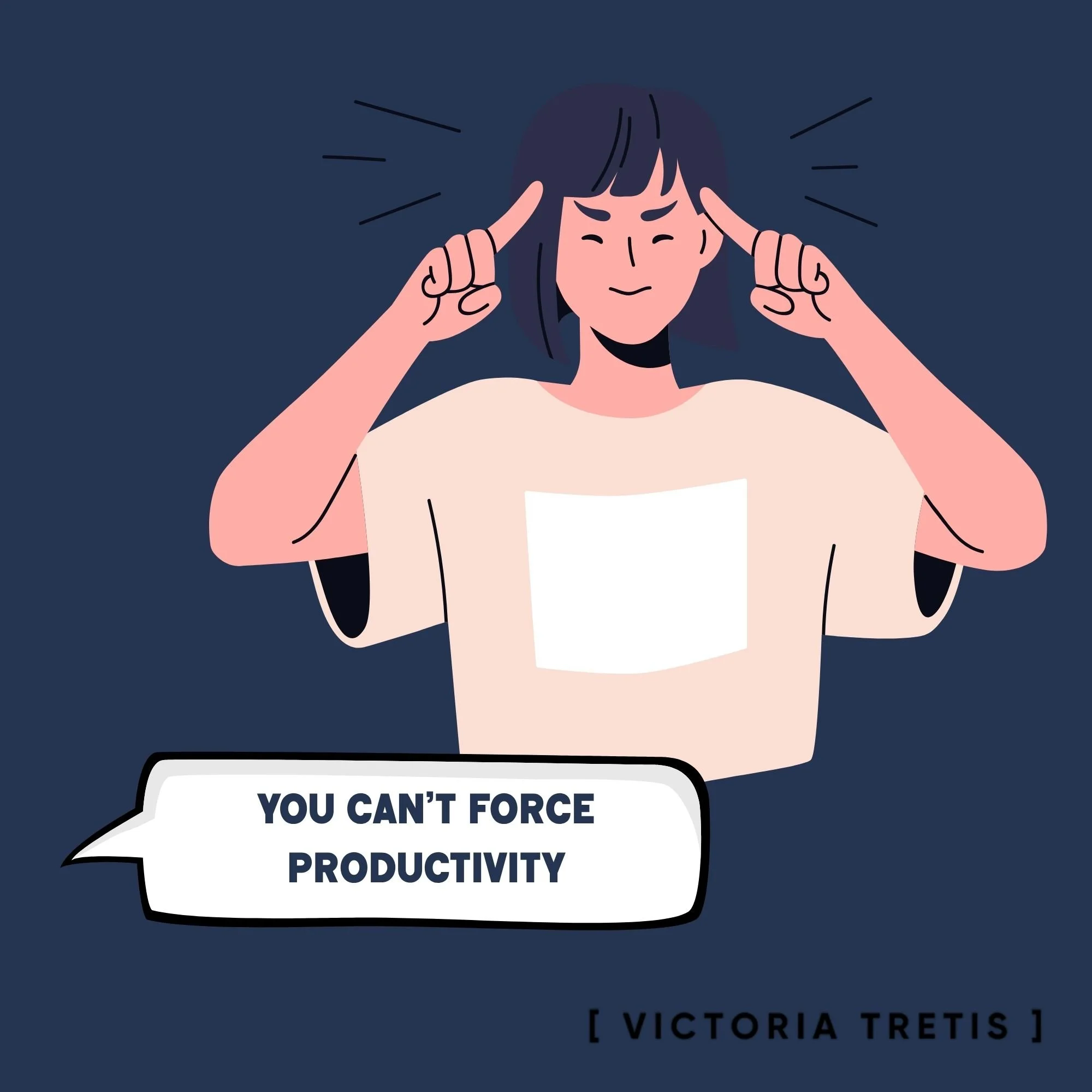
Why forcing productivity to improve focus with ADHD backfires
Most productivity advice assumes a brain that responds to logic and long timelines. Make the plan, block the calendar, follow the system.
But if your brain runs on interest (hello ADHD!) rather than instruction, a 12-week plan is just a longer list of days to feel behind on. The system doesn't create momentum - it creates evidence that you've failed at another system. And every abandoned planner or untouched app seems to confirm it: you're the problem. Except you're not - those systems were designed for brains that respond to instructions, and yours responds to interest.
Focusing with ADHD usually involves trying and testing different strategies like breaking tasks up into smaller chunks, body doubling, working in small sprints, and finding unique ways to create momentum.
What actually works really well for focus with ADHD: short bursts, with a witness
Three things reliably move a stuck goal forward:
A short timeframe. Five days is long enough to focus and achieve something real and short enough that your brain can see the whole shape of it. There's no week 9 to dread. Urgency shows up naturally because the finish line is visible from the start.
One goal, not a life overhaul. Narrowing to a single, specific thing removes the "too many steps, no starting point" problem. You're not reorganising your entire existence - you're focusing on one thing you've already decided matters.
A witness. This is the part most people skip, and it's the part that works. Telling another human what you're doing changes the goal's status in your head. It stops being a private maybe and becomes a small, real commitment. You don't need someone managing you or chasing you - you need someone who knows.
That's the whole model. Not more discipline. Not a better system. A short burst, one goal to focus on, and a real person on the other end.
This is exactly why I built One Thing, Five Days - a $5 email series where you bring one goal and I'm in your inbox for five days while you get it done.
One email a day with coaching questions and one clear action. You hit reply and tell a real human what you're working on - and I read every single one.
Pick the coaching voice your brain responds to
Here's the part I'm most proud of: at checkout, you choose how you want to be coached.
Gentle gives you space, encouragement and permission to go at your own pace. Direct is frank and to the point: you said this mattered, so what's the move?
Same five days, same questions underneath - just delivered the way you best respond to. Some brains need softness. Some find softness patronising and want straight talk. You know yours, and you can pick a different voice each time you run it.
Quick answers about One Thing, Five Days
What kind of goal should I bring to focus on? One specific thing you can realistically move forward in five days. If it needs six months, bring the first five days of it.
When do the emails arrive? The first lands the moment you buy, the rest every 24 hours - no waiting for Monday, wherever you are in the world. (If today happens to be Monday, well, that works out rather nicely.)
Do I need an ADHD diagnosis? No. All brains are welcome here.
Can I do it more than once? Yes - that's the point. New goal, new round, whenever you're ready.
Is there a subscription? No. One payment, five days, done.
And if you want me personally replying to your reflections every day, there's an upgrade for that - limited to 5 people at a time.
Start your five days. Choose your voice:
FAQs about How to Focus with ADHD
Why is it so hard to focus with ADHD? People with ADHD often struggle with something called “executive functioning” (you might also hear it called executive dysfunction), and this affects the ability to do things like planning, prioritising, starting tasks and maintaining attention. It's never a lack of motivation, effort – it's simply how the brain processes information and the motivation to get started.
Why do I procrastinate and find it hard to focus, even when I want to get something done? For many people with ADHD, procrastination happens because the brain struggles to get started when a task feels overwhelming, boring or lacks urgency. It's often linked to executive functioning challenges – it’s never laziness.
Does forcing yourself to be productive work if you have ADHD?Usually not. Many people with ADHD find they work better when tasks are interesting, urgent or broken into smaller, manageable goals (or - even better - a combination of those!)
How can I improve my focus with ADHD? Strategies that can help include reducing distractions, breaking tasks into smaller steps, working in short bursts, using timers, creating accountability and choosing one clear goal rather than trying to tackle everything at once. This is what I created One Thing, Five Days for. Check it out here.
Why does accountability help people with ADHD to focus? Sharing your goal with someone else can make it feel more real and immediate. For many people with ADHD, external accountability provides enough motivation to get started without needing someone to constantly supervise them.
Are short work sessions better for focus than long ones for people with ADHD? Often, yes. Short, focused sessions can feel more achievable and create a sense of urgency that helps the ADHD brain engage. Many people find they're more productive working in 20–45 minute bursts with breaks in between.
Can perfectionism make ADHD procrastination worse? Absolutely. If you're worried about making mistakes or being judged, it can feel safer to avoid starting altogether. Perfectionism and ADHD often go hand in hand, making focus and procrastination even more difficult to overcome.
Is there a top productivity system or hack for ADHD? There isn't one system that works for everyone - I wish there was! The most effective approach is usually one that works with your brain rather than against it, using things like interest, little pops of dopamine, short timeframes, accountability and realistic goals.
Can ADHD coaching help with focus and procrastination? Many people find ADHD coaching helpful because it focuses on practical strategies, accountability and understanding how their brain works. Rather than trying to force traditional productivity methods, coaching helps build systems that are manageable and personalised to you.